
Trusted physiotherapy in Chennai since 2017
- Chinmaya Nagar, Chennai - 600092
- Mon-Fri 10:00am-1:30pm, 5:00pm-8:30pm
Health Tips
 20 June, 2020
How Kinesiotaping Supports Injury Recovery
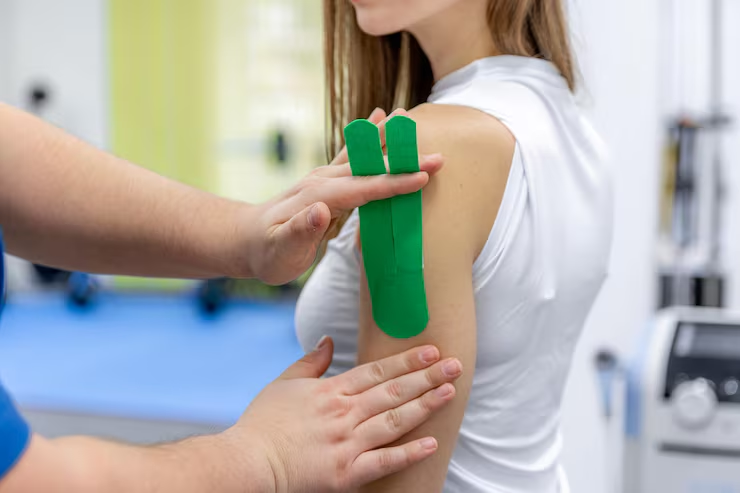
Kinesiotaping has become a mainstay in modern sports medicine and rehabilitation. Unlike traditional athletic tape, which is designed to limit motion, Kinesio tape is elastic and flexible, mimicking the properties of human skin. This allowing for a full range of motion while providing essential support to muscles and joints during the healing process.
The science behind Kinesiotaping lies in its ability to lift the skin microscopically. This lifting effect creates more space between the skin and the underlying tissues, which helps to improve blood circulation and lymphatic drainage. By reducing pressure on pain receptors, it provides immediate relief from inflammation and swelling, accelerating the body's natural recovery time.
How It Works: Proprioception and Support
Beyond physical support, Kinesiotaping provides "proprioceptive" feedback to the brain. It reminds the body of the correct alignment and movement patterns, which is crucial for preventing re-injury. Whether you're dealing with a sprained ankle, runner's knee, or chronic shoulder pain, the tape acts as a 24/7 therapeutic tool that continues to work long after you've left the clinic.
Common Uses of Kinesiotaping
- Reduction of muscle fatigue and cramping.
- Support for unstable joints (shoulders, knees, ankles).
- Management of lymphedema and chronic swelling.
- Correction of postural imbalances.
- Post-surgical rehabilitation support.
At Dhanvanthri Physiotherapy Clinic, Dr. Poornima Venkat uses advanced taping techniques tailored to each patient's specific injury and movement needs. Combined with targeted exercises, Kinesiotaping ensures you can stay active and mobile while your body heals.

Dr. Poornima Venkat
Dr. Poornima Venkat is the founder of Dhanvanthri Physiotherapy Clinic, Chennai. With international certifications in Dorn Therapy, Fascial Manipulation, and Kinesiotaping, she specializes in women's health and orthopedic physiotherapy.



Leave a Comment